Read a lake in ten minutes
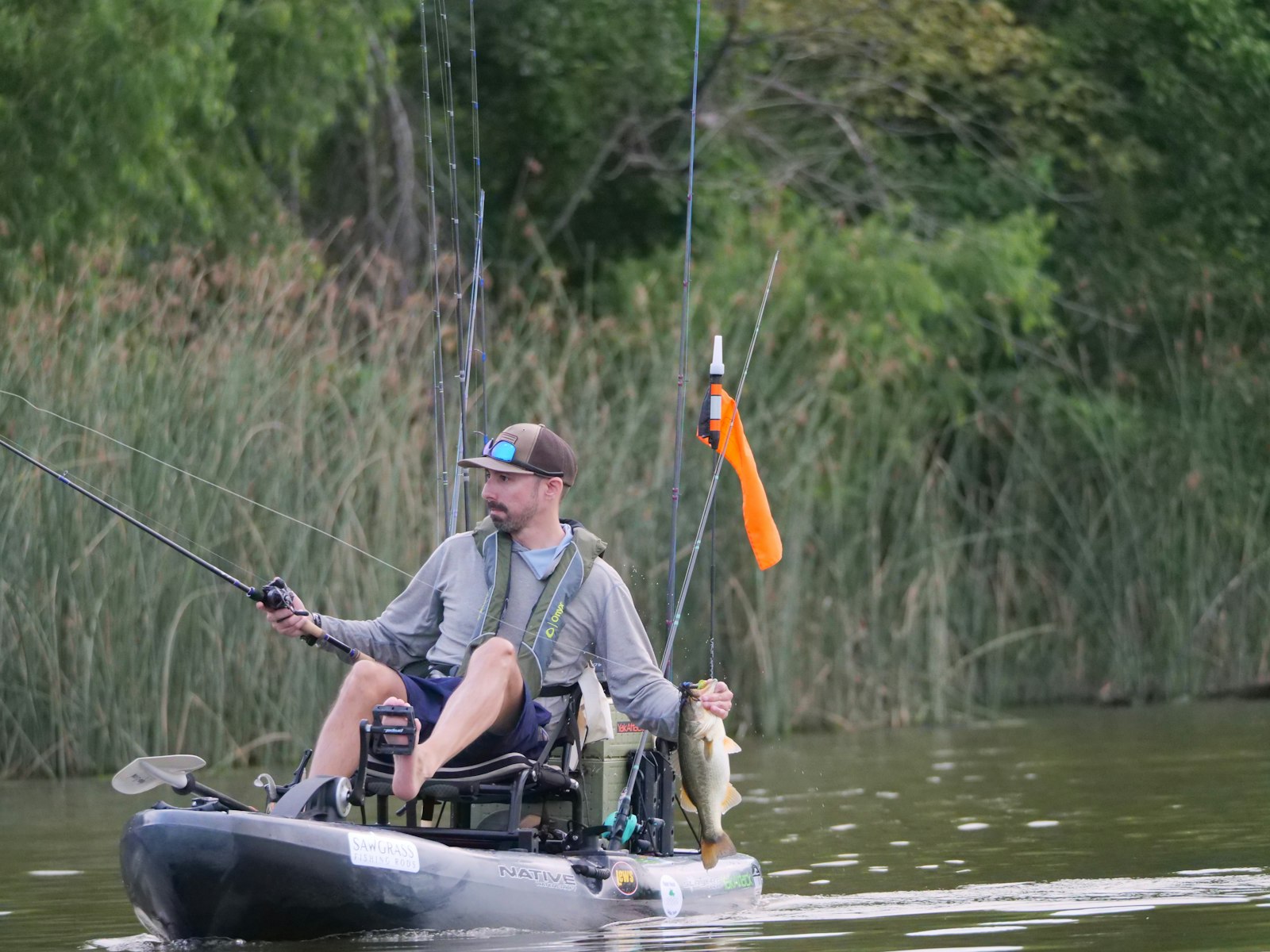
Photo by Richard R on Unsplash.
Bass are not spread evenly across a lake. They sit where food is forced past them, or where they can hide and still see. If you spend the first ten minutes looking instead of casting, you will waste fewer hours on dead water.
1. Something that breaks the bottom
A laydown, a dock piling, a rock that does not match the rest of the bank, a weed edge that stops in a clean line. Bass use edges. A bare sand flat with nothing on it is a highway, not a house. Fish the change, not the middle of the flat.
2. The wind
Wind pushes bait. The bank the wind is blowing into is usually the better bank, especially if it also has cover. A calm, pretty cove on the lee side looks nicer and often holds fewer feeding fish. Start on the windy side unless the water is so muddy you cannot see six inches.
3. Depth you can actually reach
From a boat, that might be a channel swing next to a point. From the bank, it is the first drop you can cast to — often the outside edge of the weeds, or the shade under the first dock. Do not burn an hour throwing at water that is two feet deep and wide open in the middle of a bright day. Bass will be there at dawn. At noon they have slid.